
Self-Care Includes Boundaries, Support, and Self-Compassion
Self-care is often presented as a quiet morning, a relaxing bath, a walk in nature, or a few minutes of mindfulness.
Those things can be helpful. But for many professionals and leaders, self-care must include something less comfortable and more transformative:
boundaries.
It may mean saying no to a request that does not belong to you. It may mean stepping away from work before everything is finished. It may mean asking for support instead of trying to solve the problem alone.
It may also mean admitting that you are not okay.
For thoughtful, capable adults, this can be difficult. You may be accustomed to being dependable. People may come to you because you are steady, resourceful, compassionate, and good at finding a way forward.
But being dependable does not mean being endlessly available.
Self-Care Is Not Selfish
If you are responsible for a team, a business, a family, a ministry, or a meaningful mission, you may worry that prioritizing yourself is selfish.
You may think:
- “Other people have it worse.”
- “I should be able to handle this.”
- “This is just a busy season.”
- “I can rest when the project is finished.”
- “People are depending on me.”
- “I do not want to let anyone down.”
These thoughts are understandable. They may even reflect values you care about, such as commitment, generosity, and responsibility.
But self-neglect is not the same as service.
When you consistently ignore your own needs, you may eventually have less patience, creativity, clarity, and emotional availability to offer others. Caring for yourself helps you remain connected to the person you are trying to become—not merely the role you are trying to perform.
Why Boundaries Matter for Mental Health
Boundaries clarify where your responsibility begins and ends.
They help protect your time, energy, privacy, emotional capacity, and relationships. Boundaries also make it possible to care for others without quietly building resentment.
Without boundaries, you may find yourself:
- Saying yes while feeling angry
- Answering messages late into the night
- Taking responsibility for other people’s emotions
- Overexplaining your decisions
- Avoiding difficult conversations
- Feeling guilty whenever you rest
- Becoming increasingly exhausted and disconnected
A boundary is not a punishment. It is information.
It communicates what you are available for, what you are not available for, and what you need in order to remain healthy in the relationship or situation.
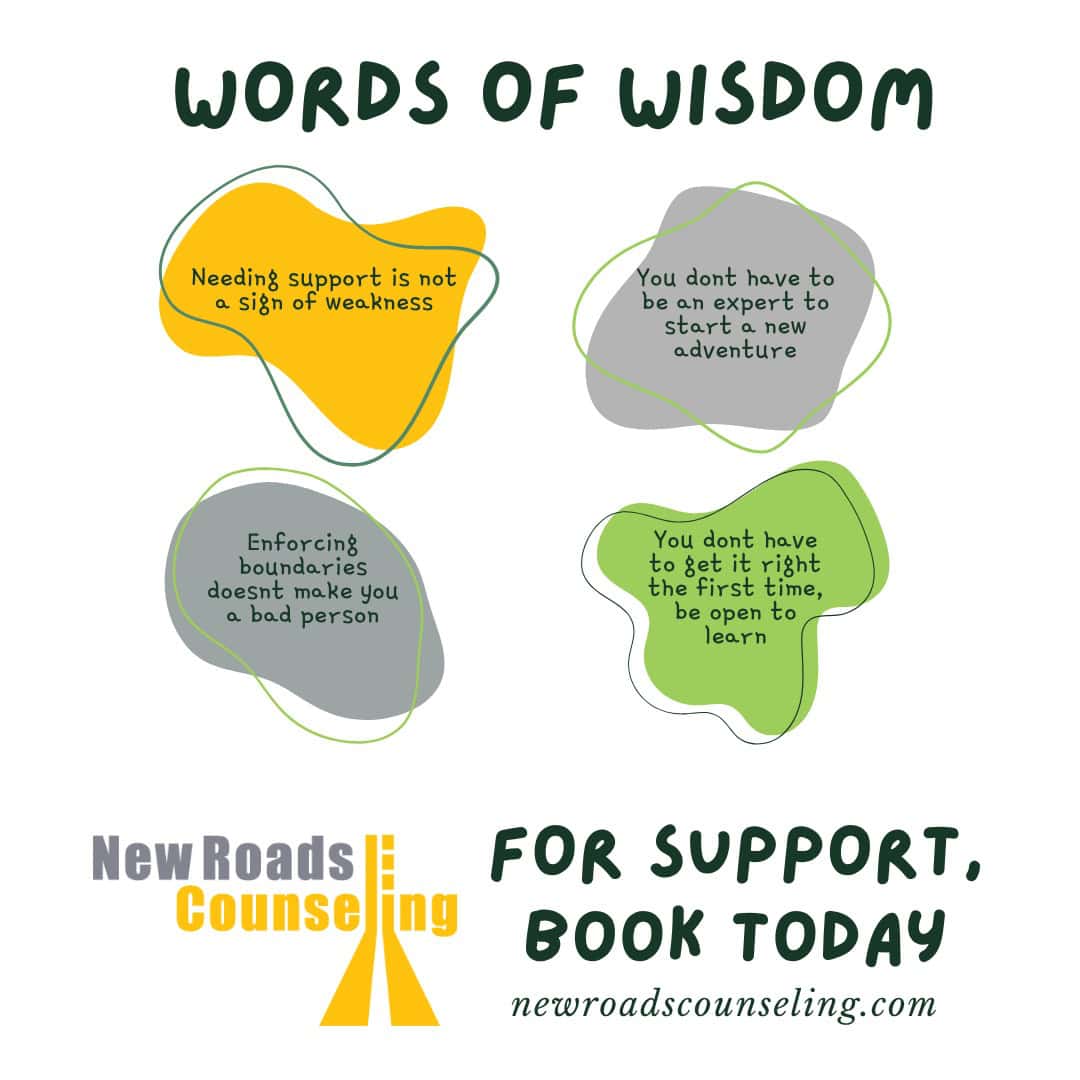
Healthy boundaries and supportive relationships are important parts of mental health care.
Boundaries Do Not Make You a Bad Person
Many people fear that setting boundaries will make them appear selfish, cold, difficult, or uncaring.
But enforcing boundaries does not make you a bad person.
It may make you a person who is becoming more honest.
For example, instead of saying yes automatically, you might say:
- “I am not available to discuss this right now.”
- “I need time to think before I answer.”
- “I cannot take that on this week.”
- “I am willing to help, but I need a clear limit.”
- “I need some quiet time this evening.”
- “That does not work for me.”
- “I understand that you are disappointed, but my decision remains the same.”
A healthy boundary does not require a lengthy defense. In fact, overexplaining can sometimes signal that you do not believe you are allowed to have the boundary in the first place.
You are allowed to communicate clearly and respectfully without presenting a courtroom argument for your needs.
Asking for Support Is a Strength
People who are successful in their careers often know how to solve problems. They are used to gathering information, creating plans, and taking action.
But emotional pain does not always respond to increased effort.
You cannot always think your way out of grief. You cannot always work your way out of burnout. You cannot always use discipline to resolve trauma, relational disconnection, or deeply rooted patterns.
Support offers something different: relationship, perspective, accountability, and a place to process what you have been carrying.
At New Roads Counseling, therapy is designed for adults who may be thoughtful and self-aware but are still feeling overwhelmed, stuck, disconnected, or unlike themselves. The work may involve anxiety, trauma, grief, relationship challenges, compassion fatigue, burnout, or major life transitions.
You do not need to arrive with a perfect explanation. You only need enough honesty to begin.
Practicing Self-Compassion When You Are Struggling
Self-compassion is not the same as making excuses.
It does not mean abandoning growth, responsibility, or accountability. It means learning to respond to yourself with the same patience and humanity you might offer someone you care about.
Consider the difference between these two internal responses:
Harsh self-judgment:
“I should not be struggling with this. What is wrong with me?”
Self-compassion:
“This is difficult, and I am having a hard time. What support or next step would help me move through it?”
The second response does not deny the difficulty. It creates room to respond wisely.
Growth-minded people sometimes believe that every challenge should produce immediate improvement. But healing is rarely a straight line. You may understand a pattern and still repeat it. You may set a boundary and later soften it. You may make progress and then experience a difficult week.
That does not erase the progress you have made.
You do not have to get everything right the first time. You can be open to learning.
You Are Not Alone
One of the most painful experiences in adulthood is believing that everyone else is managing life better than you are.
You may look at colleagues, friends, or other leaders and see confidence, clarity, and success. You may not see the anxiety, grief, exhaustion, relational pain, or private uncertainty they carry.
The truth is that many capable people need support.
New Roads Counseling offers ongoing online therapy for adults throughout California and Texas, as well as in-person counseling in Petaluma, California.
For those who want focused, uninterrupted work, therapy intensives are available in three-hour, six-hour, and twelve-hour formats. These experiences are designed for people who feel stuck, are working through something time-sensitive, or want to go deeper than a traditional weekly session allows. Learn more about our intensives
Weekend therapy retreats at Wildwood Ranch in Garden Valley, California, provide an immersive therapeutic setting for individuals and couples. The retreats combine focused clinical work with time for reflection, nature, rest, and integration. Learn more about our retreats
Self-Care That Is Sustainable
Self-care becomes more sustainable when it is connected to your values.
If you value leadership, boundaries help you lead without constantly operating from depletion.
If you value relationships, self-compassion helps you show up with greater emotional availability.
If you value growth, support helps you move beyond insight into meaningful change.
If you value integrity, honest communication allows your outer life to become more aligned with your inner experience.
You are allowed to protect your energy.
You are allowed to ask for help.
You are allowed to stop performing strength every minute of every day.
Self-care is not about becoming less caring. It is about learning how to care without abandoning yourself.
Series Navigation
This is part two of our September self-care series.
Begin with A Simple Mental Health Checklist for Practicing Self-Care or continue to 8 Simple Self-Care Practices to Support Your Well-Being.
Ready to Take the First Step?
If something on this page resonated with you, I’d love to connect. The first step is a free, no-pressure consultation call where we can talk about what you’re navigating and whether working together might be the right fit.
There’s no commitment required. Just a conversation.